

Heart Failure in Dogs
What Is Heart Failure in Dogs?
Heart failure in dogs is not a disease by itself. It’s a syndrome — a group of clinical signs — that occurs when the heart can no longer pump blood effectively, and cardiac output becomes insufficient to properly perfuse all the body’s tissues.
Underlying Diseases That Cause Heart Failure
Multiple heart diseases can lead to the development of heart failure:
- Valve problems:
Many small-breed dogs are predisposed with age to mitral valve degeneration — a condition known as myxomatous mitral valve disease — where the valve between the left atrium and left ventricle deteriorates. - Cardiomyopathy:
In larger breeds, heart disease often manifests as dilated cardiomyopathy, where the ventricles enlarge and the heart muscle walls thin, reducing pumping ability. - Congenital anomalies:
Some dogs are born with structural heart defects — such as septal defects between chambers or valve malformations — that may progress over time and lead to heart failure.
Signs of Heart Failure in Dogs
Although the underlying causes vary, heart failure typically produces similar clinical signs, including:
- Increased fatigue and exercise intolerance
- Shortness of breath
- Coughing
- Abdominal swelling
- Fainting or collapse
- Peripheral edema (less common)
How Vets Diagnose Heart Failure
To confirm heart failure, a veterinarian will:
- Use a stethoscope to listen for a heart murmur, rapid heartbeat, or sounds of pulmonary edema.
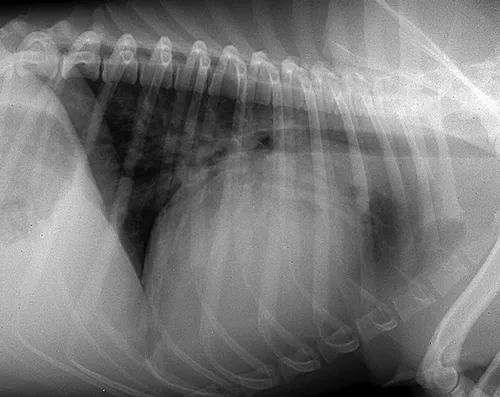
- Perform chest X-rays and echocardiography (ultrasound) to visualize heart size and function.
- Sometimes an electrocardiogram (ECG) is used if arrhythmias are suspected.
These tests not only confirm the presence of heart failure but also help identify the underlying heart disease.
Treatment of Heart Failure in Dogs
If the underlying heart disease can be treated, that treatment is ideal. However, in many cases the goal is to support heart function and improve blood flow rather than cure the condition. Common medications include:
- ACE inhibitors (e.g., enalapril, benazepril, ramipril)
- Diuretics (e.g., furosemide)
- Inodilators (e.g., pimobendan)
- Digitalis glycosides (e.g., digoxin)
Depending on the stage of heart failure, symptoms, and primary disease, the veterinarian will tailor the best combination of treatments to enhance quality of life and extend survival.
In addition to medication, owners may be advised to help their dog maintain a healthy weight and consider a low-salt diet designed for cardiac patients.
Leave a reply
Leave a reply